FORCED CIRCULATIONFOOD CONCENTRATION SYSTEMS

Home / Applications

Forced circulation for fouling-prone concentration duties

Use deposit location, duty decline and cleaning recovery to review fouling-prone food liquids without assuming circulation eliminates deposits.

Identify the deposit mechanism

Record where deposits appear, how duty changes over a production run and what inspection finds. Distinguish precipitation, product burn-on and other observed mechanisms. These observations are more useful than describing the feed only as difficult.

Request serviceable equipment

Review heater inspection clearance, removable access, draining and cleaning coverage across the full loop. Include the pump and concentrate take-off in the cleaning boundary. Confirm how production performance will be compared before and after cleaning.

Agree operational acceptance

State the expected production interval and the cleaning method to be evaluated. Use representative product conditions for the performance and cleaning checks. Higher circulation or heating temperature is not an automatic remedy for lost heat transfer.

Information to include in your enquiry

  • Deposit samples and location
  • Duty decline over a run
  • Cleaning method and recovery
  • Inspection and maintenance clearance
Equipment to review together

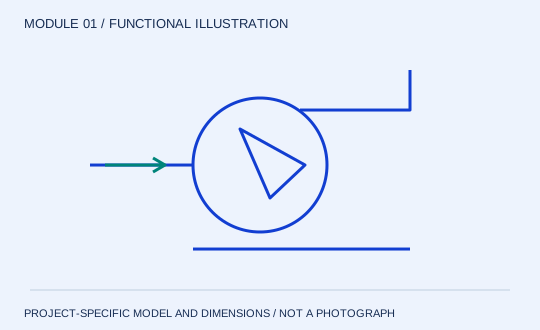
Circulation pump & drive functional diagram
MODULE 01

Circulation pump & drive

Keep the loop moving. The circulation pump sets the flow through the heater. That flow is distinct from the incoming feed and from the mass of water evaporated. Selection must follow the concentrated liquid throughout the planned operating range, including start-up and restart after cooling.

Review structure & specification →
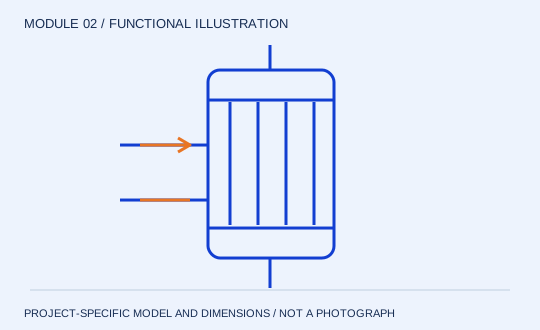
External heater functional diagram
MODULE 02

External heater

Add heat under pressure. In the common non-boiling heater arrangement, pressure in the circuit limits boiling within the heater. Heat is added before the liquid enters the flash zone. Tube or plate geometry is selected from product behaviour and pressure-drop constraints, rather than the circulation label alone.

Review structure & specification →
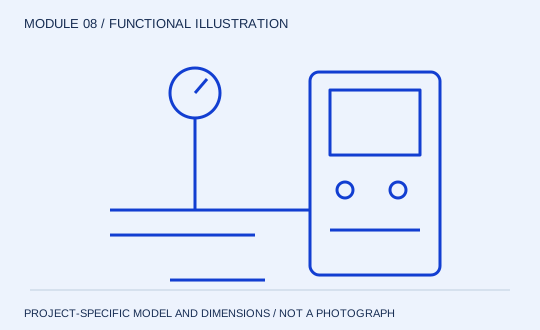
Controls, sampling & CIP interfaces functional diagram
MODULE 08

Controls, sampling & CIP interfaces

Observe the limits; validate the clean. A useful control philosophy connects each process risk to a measurement and response. Loss of circulation, feed interruption or a changing vacuum needs a defined action. The cleaning boundary must include the pump and every product-contact part of the loop.

Review structure & specification →