FORCED CIRCULATIONFOOD CONCENTRATION SYSTEMS

Home / Systems

Multi-effect forced circulation evaporator

Compare staged evaporation with vapour reuse, product-specific circulation duties and coordinated pressure, feed and concentrate controls.

Connect the heat and material balances

In a multi-effect train, vapour from one effect can supply heat to another operating at a lower pressure. Each effect still needs a defined material balance and heating duty. Compare utility demand at the same total water removal, concentration and operating conditions.

Different effects can have different duties

The product changes as water is removed. Confirm where viscosity, solids formation or deposits become limiting, and whether forced circulation is required in every effect or only in the finishing stage. Arrange interstage transfer and concentrate control around the actual product path.

Review operation as a train

A staged system requires coordinated start-up, vacuum, condensate handling and level control. Request the effect-by-effect pressure and temperature schedule, the transfer arrangement, and the response to interrupted feed or heating service.

Information to include in your enquiry

  • Effect-by-effect product properties
  • Total evaporation duty
  • Interstage transfer conditions
  • Available steam and vacuum services
Equipment to review together

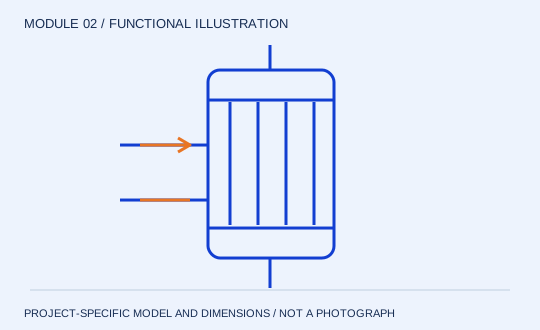
External heater functional diagram
MODULE 02

External heater

Add heat under pressure. In the common non-boiling heater arrangement, pressure in the circuit limits boiling within the heater. Heat is added before the liquid enters the flash zone. Tube or plate geometry is selected from product behaviour and pressure-drop constraints, rather than the circulation label alone.

Review structure & specification →
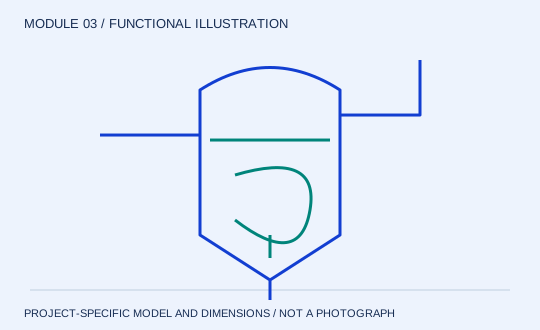
Flash separation vessel functional diagram
MODULE 03

Flash separation vessel

Release vapour and retain liquid. The pressure change at the separator enables part of the heated liquid to flash. The vessel provides space for vapour disengagement while maintaining liquid inventory for recirculation. Its level and geometry therefore affect both separation and pump suction.

Review structure & specification →
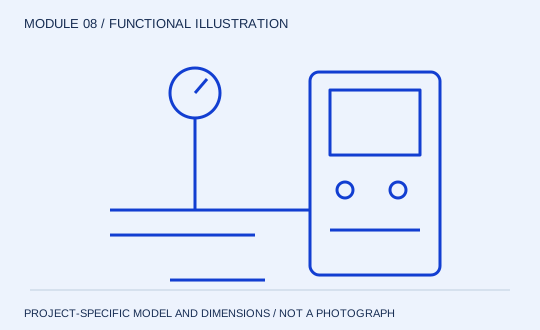
Controls, sampling & CIP interfaces functional diagram
MODULE 08

Controls, sampling & CIP interfaces

Observe the limits; validate the clean. A useful control philosophy connects each process risk to a measurement and response. Loss of circulation, feed interruption or a changing vacuum needs a defined action. The cleaning boundary must include the pump and every product-contact part of the loop.

Review structure & specification →