FORCED CIRCULATIONFOOD CONCENTRATION SYSTEMS

Home / Applications

Forced circulation for food extracts and ingredients

Build an extract-concentration requirement around composition, suspended material, sensitive components, fouling observations and final-product criteria.

Define what the concentrate must preserve

Describe the extract composition and purpose of the concentrate. Identify any analytical or sensory criteria affected by temperature, residence history or vapour loss. Agree these criteria before defining a heating and separation arrangement.

Connect composition to equipment duties

Record suspended material, changes in viscosity and known deposits as concentration rises. Ask how the proposed heater can be inspected and cleaned, and how the separator controls foam or carry-over where these are observed.

Compare on a common product basis

Use the same starting material, concentration targets and quality criteria for competing proposals. Request the liquid and vapour balances, equipment boundary and acceptance method rather than an unrestricted material-suitability statement.

Information to include in your enquiry

  • Composition and sensitive components
  • Measured viscosity trend
  • Suspended solids and foam observations
  • Analytical or sensory criteria

Equipment to review together

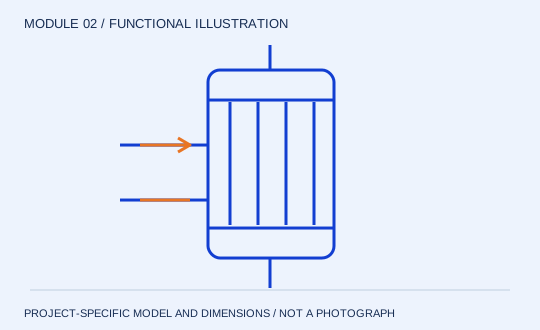
External heater functional diagram
MODULE 02

External heater

Add heat under pressure. In the common non-boiling heater arrangement, pressure in the circuit limits boiling within the heater. Heat is added before the liquid enters the flash zone. Tube or plate geometry is selected from product behaviour and pressure-drop constraints, rather than the circulation label alone.

Review structure & specification →
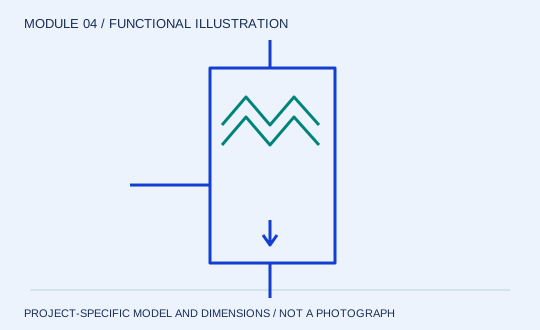
Entrainment separation functional diagram
MODULE 04

Entrainment separation

Protect the recovered vapour. Droplets leaving with the vapour represent product loss and can contaminate downstream equipment. A separation device must work with the product’s foam and fouling behaviour. The choice of internals depends on the operating envelope and cleaning access.

Review structure & specification →
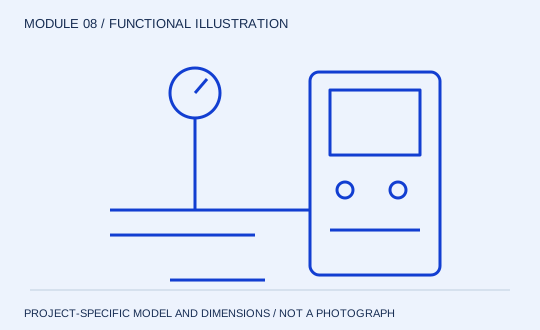
Controls, sampling & CIP interfaces functional diagram
MODULE 08

Controls, sampling & CIP interfaces

Observe the limits; validate the clean. A useful control philosophy connects each process risk to a measurement and response. Loss of circulation, feed interruption or a changing vacuum needs a defined action. The cleaning boundary must include the pump and every product-contact part of the loop.

Review structure & specification →