FORCED CIRCULATIONFOOD CONCENTRATION SYSTEMS

Home / Comparison

Forced circulation vs falling film: compare one duty

Use a common feed, concentrate target and quality boundary before comparing equipment arrangements.

Common-duty questionForced-circulation reviewFalling-film review
Product movementPumped recirculation through an external heaterDistribution and film wetting across the heating surface
Electrical demandLoop flow × pressure rise, plus other auxiliariesFeed/transfer or recirculation duties, plus other auxiliaries
Thermal historyCirculating inventory, repeated passes and hold-upFilm passage plus separators, preheat and any recirculation
Mechanical exposureRepeated pump/pipe/heater shearDistribution, pumping and actual pass arrangement
Deposits & cleaningMechanism, inspection, pump and full-loop CIPWetting, surface deposits, distribution access and CIP
Combined processMay serve as a product-specific finishing stageMay pre-concentrate a suitable feed before a finishing stage
01

Fix the comparison basis

Use identical feed composition and temperature, feed mass flow, target solids, evaporation load, operating hours and product acceptance criteria. State whether the material properties have been measured. Changing those inputs invalidates a simple energy or capacity comparison.

02

Look beyond heating steam

Include circulation and transfer pumping, vacuum service, cooling and any recompressor. Ask for electrical demand at the actual viscosity and flow condition. A thermal saving alone does not establish a lower total operating cost.

03

Compare exposure and maintenance

A falling-film arrangement relies on adequate distribution and wetting. A forced-circulation loop adds circulating inventory and repeated passes. Compare the actual thermal history, shear, deposition pattern, cleaning frequency and access requirements instead of ranking the names.

04

Consider a staged solution

A suitable feed may be pre-concentrated in one arrangement and finished in another. Define the hand-off concentration and temperature, then reconcile both stages on the same mass and energy basis. A hybrid train still needs an integrated control and cleaning review.
Related equipment

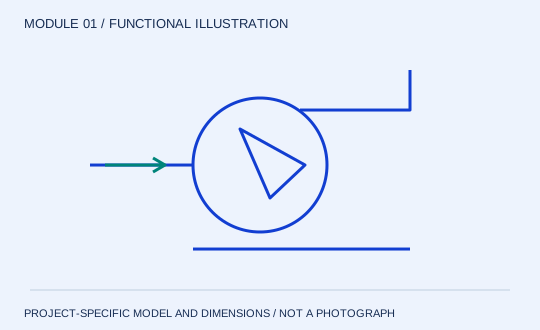
Circulation pump & drive functional diagram
MODULE 01

Circulation pump & drive

Keep the loop moving. The circulation pump sets the flow through the heater. That flow is distinct from the incoming feed and from the mass of water evaporated. Selection must follow the concentrated liquid throughout the planned operating range, including start-up and restart after cooling.

Review structure & specification →
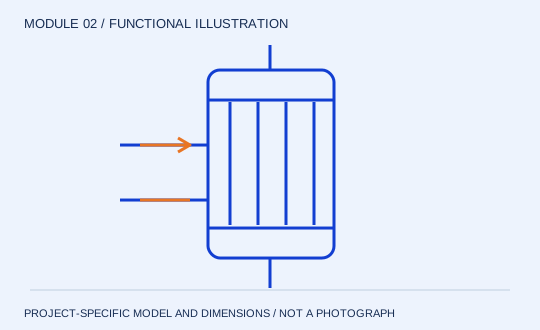
External heater functional diagram
MODULE 02

External heater

Add heat under pressure. In the common non-boiling heater arrangement, pressure in the circuit limits boiling within the heater. Heat is added before the liquid enters the flash zone. Tube or plate geometry is selected from product behaviour and pressure-drop constraints, rather than the circulation label alone.

Review structure & specification →

Next step

Continue the engineering review →